
AI SEO Tools Scale Agile Solutions: How AI-Powered Platforms Transform SEO Strategy
Key Takeaway
AI SEO tools scale agile solutions by automating keyword research, content optimization, and performance tracking within sprint-based workflows, enabling teams to produce 40% more content, reduce manual workload by up to 80%, and achieve measurable ranking improvements—with case studies showing 28% to over 4,000% organic traffic growth when AI-powered platforms are integrated into agile marketing frameworks.
AI SEO tools scale agile solutions by combining the speed of artificial intelligence with the iterative, sprint-based methodology of agile marketing. In 2026, with 86% of SEO professionals already integrating AI into their strategy and 82% of enterprise specialists planning increased investment, this convergence is no longer optional—it is the operating standard for competitive search optimization.

Image: Unsplash (CC0). AI-driven data networks powering modern SEO strategies.
What Are AI SEO Tools and Agile Solutions?
Before diving into how AI SEO tools scale agile solutions, it is important to understand both halves of this equation. AI SEO tools are software platforms powered by artificial intelligence, machine learning, and natural language processing that automate and enhance search engine optimization tasks—from keyword research and content scoring to technical audits and AI search visibility tracking.
Agile solutions, originally developed in software engineering, emphasize flexibility, collaboration, and iterative improvements through manageable task breakdowns. In the context of SEO, agile means organizing work into focused sprints (typically 1-2 weeks), reviewing performance data at the end of each cycle, and adjusting strategy based on what the data reveals. As Rankvise explains, when these two disciplines merge, teams can “automate workflows, adapt rapidly to market changes, and scale growth without sacrificing quality.”
The synergy is powerful: AI handles the data-heavy, repetitive tasks that would otherwise consume entire sprints, while the agile framework ensures that human strategy, creativity, and judgment drive the overall direction. This is how AI SEO tools scale agile solutions in practice—not by replacing the methodology, but by supercharging every phase of it.
Why AI SEO Tools Scale Agile Solutions in 2026
The urgency behind integrating AI SEO tools with agile methodologies comes from several converging forces in the 2026 search landscape:
86%
SEO pros using AI tools
-34.5%
Clicks lost to AI Overviews
14.6%
AI-driven SEO conversion rate
$4.97B
Projected market by 2033
According to data from SEOmator's 2026 comparison study, AI-driven SEO strategies achieve a 14.6% conversion rate compared to just 1.7% for traditional methods. Meanwhile, the global AI SEO tools market is projected to grow from $1.99 billion in 2024 to $4.97 billion by 2033 at a 15.2% compound annual growth rate.
Google AI Overviews now appear in 57% of searches and reduce organic clicks by an average of 34.5%, as Position Digital reports. This makes agile adaptation essential—teams that cannot rapidly iterate on their search strategy risk losing visibility across both traditional and AI-powered search interfaces.
The Core Ways AI SEO Tools Scale Agile Solutions
Here are the key mechanisms through which AI SEO tools amplify agile marketing workflows, drawing on frameworks described by Starlink Care and Oyova:
1. Automated Keyword Research and Clustering
AI tools reduce keyword research time by 80%, according to industry benchmarks. Platforms like Keyword Insights and SE Ranking use SERP-based clustering algorithms to group thousands of keywords by search intent in minutes—a task that would consume entire sprints when done manually. This frees agile teams to focus their sprint capacity on strategy and content creation rather than data gathering.
2. Real-Time Content Optimization
Content optimization tools like Surfer SEO, Clearscope, and NeuronWriter provide real-time NLP scoring as writers create content. Within an agile sprint, this means a writer can produce a fully optimized article in a single session rather than cycling through multiple drafts over several days. Teams report that workflow time drops from 8 hours to 3 hours per piece using AI-assisted optimization.
3. Sprint-Based Performance Monitoring
AI-powered dashboards from tools like BrightEdge, SEMrush, and Google Looker Studio (integrated with Search Console) give agile teams the real-time data they need for sprint retrospectives. Rather than waiting weeks for ranking data, teams get immediate feedback on content performance, enabling rapid iteration within the same sprint cycle.
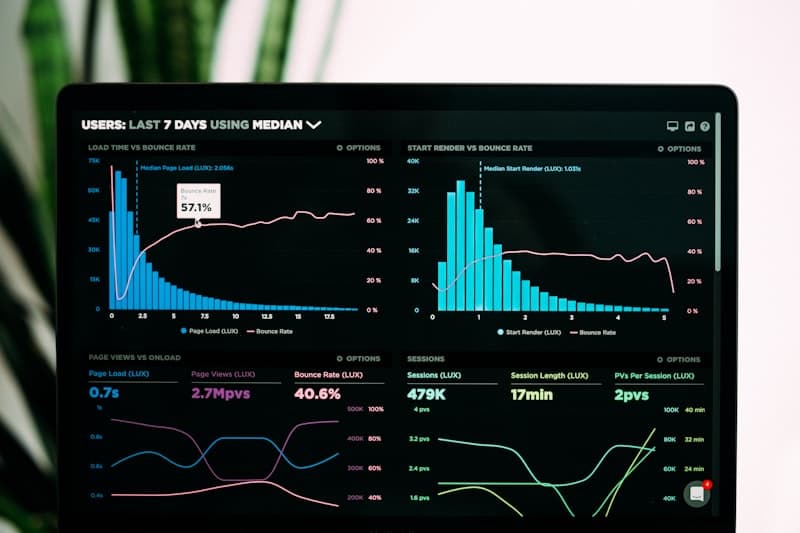
Image: Unsplash (CC0). Real-time analytics dashboards enable agile sprint-based SEO monitoring.
4. Automated Technical SEO Audits
Tools like Screaming Frog (with AI integration via ChatGPT and Gemini), Sitebulb, and Alli AI automate technical SEO audits that would otherwise require dedicated sprint capacity. Automated audits identify broken links, missing meta tags, crawl errors, and schema markup issues on a continuous basis, feeding findings directly into the agile backlog for prioritization.
5. AI Search Visibility Tracking
Perhaps the most critical capability for 2026: AI search monitoring platforms like SE Ranking's AI Overviews Tracker and AthenaHQ track your brand's visibility across ChatGPT, Perplexity, and Google AI Overviews. As Diggity Marketing documented, tracking AI search presence enabled their client to achieve 2,300% monthly AI referral traffic growth and 90 keywords appearing in AI Overviews (from zero the previous year).
6. Scalable Content Production
AI content generation tools like Writesonic, Jasper, and Semrush ContentShake AI enable teams to produce 3x more content at scale. Research shows a 42% increase in monthly article output (from 12 to 17 articles per month) when AI tools are integrated into agile sprint workflows, without compromising quality when proper human review processes are maintained.
Implementation Framework: How to Scale Agile SEO with AI Tools
Based on frameworks described by Starlink Care and adapted from enterprise implementations, here is a six-step framework for integrating AI SEO tools into agile workflows:
- Define measurable sprint goals: Establish clear KPIs for each sprint—target keywords to rank, content pieces to publish, technical issues to fix. AI tools provide the data foundation for realistic goal-setting.
- Select tools aligned with your workflow: Evaluate AI SEO platforms based on integration capabilities (Jira, Trello, Asana), LLM integration options, data accuracy, team collaboration features, and security standards. See our comprehensive AI SEO tools comparison for detailed evaluations.
- Conduct an AI-powered initial audit: Use automated crawling and analysis tools to establish your baseline. This identifies quick wins that can be addressed in the first sprint and larger initiatives for future sprints.
- Design iterative sprint structures: Plan 1-2 week sprints with clear deliverables. Use AI tools to automate keyword clustering and topic research at the start of each sprint, freeing team capacity for creative and strategic work.
- Delegate automation aggressively: Automate keyword clustering, routine audits, metadata generation, backlink tracking, and performance reporting. As Search Engine Land reports, teams using natural language programming tools automate tasks 75% faster and reduce content audit costs by 70%.
- Monitor, retrospect, and iterate: Use real-time dashboards for sprint retrospectives. Track both traditional rankings and AI search visibility. Adjust strategy based on data after each sprint.

Image: Unsplash (CC0). Cross-functional agile teams collaborate on AI-powered SEO strategy.
Case Studies: AI SEO Tools Scaling Agile Solutions in Practice
The real-world impact of combining AI SEO tools with agile methodologies is documented across multiple case studies with measurable results:
Xponent21: 4,162% Organic Traffic Growth
Xponent21, a Richmond, VA-based AI SEO agency, achieved a 4,162% organic traffic increase in under 12 months with 10.5 million search impressions. Their approach combined expert-led content development with advanced technical SEO optimization, video marketing integration, and authority-building across Google AI Overviews, ChatGPT citations, and Perplexity AI results—all organized through iterative campaign sprints.
Diggity Marketing: 2,300% AI Referral Traffic Growth
Diggity Marketing's case study documented 2,300% monthly AI referral traffic growth (year-over-year) with 90 keywords appearing in AI Overviews (up from zero). They achieved this by using Ahrefs Brand Radar for AI Overview monitoring, GA4 tracking with regex filters for AI platform attribution, and a content optimization strategy focused on direct, concise language with clear H1/H2/H3 hierarchy for AI readability.
Notably, Diggity Marketing found that lower-ranking pages sometimes outperformed higher-ranked competitors in AI Overviews due to clarity and directness rather than traditional search position. This insight underscores why agile iteration on content quality—rather than just ranking position—is critical for AI search visibility.
Rocky Brands: 30% Organic Search Revenue Increase
Rocky Brands, managing three ecommerce brands (Rocky Boots, Georgia Boot, Durango Boots), achieved a 30% increase in organic search revenue with 1,479 additional organic keywords ranking on page 1 of Google. Using BrightEdge Data Cube for keyword research, Recommendations for page optimization, and StoryBuilder for customized dashboards, they implemented an agile three-pronged approach of research, optimization, and measurement that yielded 73.6% year-over-year revenue growth during peak holiday season.
As McKennah Robinson, Rocky Brands' SEO/Content Specialist, noted: “BrightEdge has allowed us to collect research and then implement informed SEO techniques and content on our sites with detailed reporting capabilities that highlight growth in a way that is easy to follow.”
Additional Documented Results
Additional case studies from industry sources show consistent patterns:
- An e-commerce company achieved 542% organic traffic growth over two years (from ~35,000 to ~225,000 monthly visits) by integrating AI tools into their SEO strategy (SEOmator)
- A US agency used Semrush AI to optimize 100+ keywords in 2 weeks, resulting in a 28% traffic increase in 3 months
- Growth.pro documented a 472% AI visibility increase in just 90 days
- A travel company achieved a 30% increase in bookings within one quarter using AI-driven content optimization

Image: Unsplash (CC0). Data-driven growth through AI-powered SEO monitoring.
How an AI Search Monitoring Platform Improves SEO Strategy
An AI search monitoring platform improves SEO strategy by providing visibility into a dimension of search that traditional tools miss—how AI systems reference, cite, and present your content. In 2026, with 1.5 billion monthly Google AI Overview users and 810 million ChatGPT daily users, this monitoring capability is no longer optional.
Here is exactly how AI search monitoring platforms strengthen your SEO strategy:
- AI Overview presence tracking: Tools like SE Ranking's AI Overviews Tracker show which of your target keywords trigger AI-generated answers and whether your site is being cited as a source. Since 92.36% of successful AI Overview citations come from domains ranking in the top 10 organically, this data directly informs which keywords deserve sprint priority.
- Multi-platform visibility: Monitor your brand's presence across ChatGPT, Perplexity, Google Gemini, and Bing Copilot simultaneously. As Search Engine Land predicts, SEO is splitting into two disciplines: human-focused SEO (earning clicks) and AI search optimization (supplying data for AI agents).
- Citation analysis: Understand why certain content gets cited by AI systems while similar content does not. Diggity Marketing's research found that content with clear, concise language and direct answers outperforms content optimized purely for traditional ranking signals.
- Competitive intelligence: Track competitor visibility in AI search results to identify gaps and opportunities. When a competitor is consistently cited in AI Overviews for a keyword cluster, it signals both the opportunity and the content structure needed to compete.
- LLM traffic attribution: Use GA4 with regex filters to track sessions from AI platforms separately from traditional search. Research shows a 527% increase in sessions from LLMs between January-May 2024 and 2025, making this a critical tracking dimension.
The Tools That Enable AI SEO at Agile Scale
Different tools serve different roles within an agile AI SEO workflow. Based on analysis from Marketer Milk, ClickRank, and our own comprehensive tool reviews, here is how the top platforms map to agile workflow phases:
Sprint Planning & Research Phase
- Keyword Insights ($58/mo) — SERP-based keyword clustering and intent mapping for sprint backlog prioritization
- SEMrush — Competitive analysis, keyword research, and site auditing for sprint goal-setting
- Ahrefs — Backlink analysis, content gap identification, and AI Overview monitoring via Brand Radar
Execution & Content Production Phase
- Surfer SEO ($99/mo) — Real-time content scoring and NLP optimization during writing sprints
- Clearscope ($189/mo) — A-F content grading for quality assurance within sprint reviews
- Writesonic ($16/mo) — AI content generation for bulk production sprints
- Frase ($45/mo) — Rapid content brief generation for sprint kickoffs
Automation & Workflow Phase
- Gumloop (Free/$37/mo) — No-code AI agent builder for custom SEO automation workflows
- AirOps (Free to start) — Content operations automation and programmatic SEO at scale
- Alli AI — CMS-level automation for meta tags, schema markup, and on-page optimization
Monitoring & Retrospective Phase
- SE Ranking ($65/mo) — AI Overviews tracking and multi-platform visibility monitoring
- BrightEdge — Enterprise-level performance dashboards and automated reporting
- Google Looker Studio (Free) — Custom dashboards from Search Console data for sprint retrospectives
Challenges and Best Practices for Scaling AI SEO Agile Solutions
While the benefits are substantial, implementing AI SEO tools within agile frameworks comes with challenges. Based on research from Starlink Care and broader industry analysis:
| Challenge | Solution |
|---|---|
| Learning curve with new tools | Comprehensive training programs; gradual rollout over sprints |
| Tool subscription costs | Start with free tiers; scale as ROI is demonstrated (typical 300-750% monthly ROI) |
| Over-automation risk | Balance AI with human creativity; automate routine tasks, not strategy |
| Content quality concerns | Multi-stage review process; 65% of pros cite quality as top concern (SEOmator) |
| Data security concerns | Verify vendor security practices; 59% of professionals concerned (SEOmator) |
| Attribution difficulty | Use GA4 regex filters for AI platform tracking; implement UTM parameters |
As multiple r/SEO Reddit discussions emphasize, the most common mistake is treating AI tools as autonomous systems rather than assistants within a human-driven workflow. One widely-discussed thread on r/SEO found that practitioners consistently report the best results when AI handles data processing while humans maintain strategic oversight. As one commenter put it: “AI can accelerate production, but it cannot replace the human ability to interpret context, identify what's meaningful, and articulate ideas with intention.”
Another key insight from SEO community discussions: “Shortcuts create long delays when automating expertise-dependent work.” Teams that automate strategy development (rather than just data-heavy tasks) often produce lower-quality output that requires more revision, negating the time savings.
The Future: Agentic AI and Autonomous SEO Workflows
Looking ahead, the way AI SEO tools scale agile solutions is evolving toward increasingly autonomous systems. Six leading SEO experts surveyed by Search Engine Land identified these critical trends for the remainder of 2026:
- Agentic commerce: Jim Yu (BrightEdge CEO) predicts AI will move beyond answering questions to executing transactions. “Brands need to prepare now with structured data, clear content hierarchy, and machine-readable information.”
- SEO teams become product engineers: Mike King (iPullRank CEO) describes a shift where SEO success comes from building tools and automated workflows, not just producing content. Teams using natural language programming already automate tasks 75% faster.
- Proprietary data as competitive moat: Britney Muller argues that “when you own a unique metric, AI models can't just synthesize or ignore it.” Original research and branded datasets force AI citation.
- AI literacy as hiring filter: Neil Patel observes that “ROI from AI tools remains underwhelming because adoption lacks KPI connection.” Companies operationalizing AI into measurable processes gain margin advantages.
The evolution is clear: from AI-assisted human work to AI-autonomous workflows with human oversight. The agile framework remains essential as the governance structure ensuring AI-generated output meets quality and strategic standards.
Measuring ROI: The Business Case for AI SEO + Agile
Building a business case for AI SEO tools within agile environments requires clear ROI metrics. Based on ClickRank's analysis and industry benchmarks:
- Technical audits: 20 hours → 2 hours (90% reduction)
- Keyword research: 12 hours → 2.4 hours (80% reduction)
- Report generation: 8 hours → 1 hour (87.5% reduction)
- Total monthly hours saved: 30+ hours
- At $50/hour labor cost with $200-500/month tool costs, the monthly ROI ranges from 300-750%
Beyond time savings, the performance impact compounds over sprint cycles. Organizations report 65% ranking improvements, 83% traffic gains, and conversion rates climbing from 1.7% (traditional) to 14.6% (AI-driven), according to SEOmator's comprehensive comparison.
Frequently Asked Questions
Find the Right AI SEO Tools for Your Agile Workflow
Our comprehensive guide compares 13+ AI SEO tools across pricing, features, and use cases to help you build the optimal agile SEO stack.
View AI SEO Tools ComparisonSources:
- Rankvise: How AI SEO Tools Scale Agile Solutions?
- Oyova: Unlock Growth with AI SEO Tools Scale Agile Solutions
- Starlink Care: AI SEO Tools Scale Agile Solutions
- SEOmator: AI-Powered SEO vs. Traditional Methods (2026)
- Search Engine Land: AI Search Predictions 2026
- Position Digital: 100+ AI SEO Statistics for 2026
- Diggity Marketing: AI Overviews SEO Case Study
- BrightEdge: Rocky Brands Case Study
- Xponent21: AI SEO Case Study
- Clearscope: The 2026 SEO Playbook
- Marketer Milk: Best SEO Automation Tools 2026
- ClickRank: SEO Automation Tools for Agencies
- r/SEO: AI SEO Tools Discussion Thread
Last updated February 2026. Images from Unsplash (CC0 license).