
tryprofound.com Customer Success Stories: How Brands Win in AI Search
Key Takeaway
Profound (tryprofound.com) helps brands achieve measurable AI search visibility gains—from 7x increases to 800% boosts—through answer engine optimization, as documented across 9+ customer success stories from companies like Ramp, 1840 & Co, OpusClip, and Hone. Backed by $58.5 million in funding led by Sequoia Capital and trusted by 500+ organizations, Profound is the leading platform for monitoring and optimizing brand presence across ChatGPT, Perplexity, Google AI Overviews, and other AI-powered search engines.
The most compelling tryprofound.com customer success stories reveal a fundamental shift in how brands compete for visibility online. As AI answer engines like ChatGPT (now with 700 million weekly users), Perplexity, and Google AI Overviews replace traditional blue links, brands that fail to optimize for AI search risk becoming invisible to the 60% of consumers who now begin product research using AI assistants. Profound, a Sequoia-backed AI search monitoring platform, has emerged as the category leader helping over 500 organizations solve this challenge—and their customer results tell the story.

Image: Unsplash (Unsplash License). AI-powered technology driving modern search visibility strategies.
What Is Profound (tryprofound.com)?
Profound is an AI search monitoring and optimization platform that enables businesses to manage how they appear in AI-generated responses. Founded by alumni from AMD, Microsoft, Datadog, Uber, Bridgewater, and OpenAI, the company has raised $58.5 million in total funding including a $35 million Series B led by Sequoia Capital, with participation from Kleiner Perkins, Khosla Ventures, Saga VC, and South Park Commons.
The platform operates through three core pillars, as described in their Series B announcement:
- Monitor: Answer Engine Insights, Agent Analytics, and Conversation Explorer for tracking brand visibility across ChatGPT, Perplexity, Google AI Overviews, Microsoft Copilot, Claude, and Gemini
- Create: AI-optimized content generation and an Actions feature for building citation-driven content strategies
- Orchestrate: Ambient and interactive agent deployment for automated marketing workflows
As Sequoia partner Alfred Lin stated: “The Profound platform has the potential to become the command center” for brands navigating the shift from traditional search to AI-generated answers (Sequoia Capital). Today, Profound processes over 1 billion citations daily, 30 billion crawler visits daily, and 10 million prompts daily—serving more than 2,000 marketers across 500+ organizations.
7x
Ramp visibility increase
800%
Hone visibility boost
500+
Organizations using Profound
1B+
Citations analyzed daily
tryprofound.com Customer Success Stories: Deep Dives
The tryprofound.com customer success stories span industries from fintech to remote staffing to video AI, with documented results ranging from 3x to 800% visibility increases. Below are detailed breakdowns of the most documented cases, followed by highlights from additional customers.
Ramp: 7x AI Brand Visibility in Accounts Payable
Ramp, a leader in financial automation offering corporate cards, bill payments, and accounting solutions, faced a significant challenge: despite strong traditional market presence, their AI search visibility in the Accounts Payable sector ranked just 19th among fintech brands, with only 3.2% AI visibility. With 5% of all queries now answered by AI and 90% of B2B buyers using AI for purchase research, this gap represented a major missed opportunity.
Using Profound's Answer Engine Insights, Ramp's team discovered that AI systems frequently cited automation, AI, and software comparison content—material traditionally overlooked in organic search optimization. Pre-analysis showed only 6% of Ramp's existing citations came from automation-focused content.
Ramp developed four targeted pages specifically optimized for AI answer engine discovery:
- “Accounts Payable Software for Small Businesses”
- “Accounts Payable Software for Large Businesses”
- “Top 6 Accounts Payable Automation Software”
- “AI in Accounts Payable”
Ramp Results (December 2024 – February 2025)
7x
AI visibility growth
3.2% → 22.2%
Visibility score
19th → 8th
Fintech ranking
300+
Citations from 2 pages
The results were immediate and dramatic. Within one month, Ramp surpassed 11 competing brands, their two targeted pages generated over 300 citations (doubling citations compared to all previous content combined), and their citation share grew from 0.6% to 8.1%. As Ashley Nguyen, SEO Strategist at Ramp, explained:
“Profound enabled discovery of behavioral patterns traditional SEO tools couldn't capture. By analyzing long-tail LLM queries, our team gained deeper insights to complement traditional strategies—enabling more targeted testing in AI-driven search.”
— Ashley Nguyen, SEO Strategist at Ramp (source)
1840 & Co: From Invisible to Top 5 in Remote Staffing
1840 & Co, a company that builds teams using local, remote, and outsourced talent, faced an even starker challenge: complete invisibility in AI search results. Starting from 0% AI visibility, they were never cited by AI answer engines like ChatGPT, Perplexity, or Microsoft Copilot—regardless of content relevance. Their competitors dominated: Toptal held approximately 74% AI visibility in the remote staffing category, while Upwork commanded roughly 29%.
The company recognized that traditional SEO approaches wouldn't address this emerging channel. AI engines generate single, consolidated responses rather than presenting multiple ranked links, fundamentally changing how brands need to position their content.
Using Profound's platform, 1840 & Co implemented a three-phase Answer Engine Optimization (AEO) approach:
- Discovery & Analysis: Scanned hundreds of relevant queries (“best remote staffing agencies,” “top US-based staffing for developers”), identified key competitors, analyzed winning content formats (compare-contrast lists, FAQ structures), and discovered niche industry blogs influencing AI citations
- Content Creation: Published one strategically optimized blog post featuring clear segment headings (“10 Best Agencies For Remote Staffing Solutions”), direct brand placement at list tops, and bite-sized FAQ sections—formats AI engines prefer
- Continuous Monitoring: Tracked citation share frequency, content types driving citations, and competitive benchmarking via Profound's real-time dashboard
1840 & Co Results (1 Month)
0% → 11%
AI visibility
Top 5
Industry ranking
1 blog post
Content published
Within two weeks, 1840 & Co moved from 0% to 6% AI visibility. By the end of the first month, they reached 11% and achieved a top-5 ranking in remote staffing AI citations. As Jay Douglas, Marketing Director at 1840 & Co, stated:
“Profound has given us actionable insights on how our brand is performing for GEO. It's exciting to see our visibility going up.”
— Jay Douglas, Marketing Director at 1840 & Co (source)
This case study is particularly notable because a single strategically optimized blog post generated measurable gains against deeply entrenched competitors—demonstrating that in AI search, content quality and structure often matter more than domain authority or backlink volume.
OpusClip: 45% Brand Visibility and #1 Citation Share in 30 Days
OpusClip, an AI-powered video editing platform, achieved one of the most impressive results among tryprofound.com customer success stories: 45% brand visibility and the #1 citation share position in their category within just 30 days. In the highly competitive video AI market, this result demonstrates how AI-optimized content strategies can rapidly establish category dominance in answer engine results.
Hone: 800% Visibility Boost with AI-Optimized Content Workflows
Hone, a corporate training and leadership development platform, achieved an 800% increase in AI search visibility by using AI-optimized content workflows powered by Profound. This is the largest percentage visibility increase among documented tryprofound.com customer success stories, showcasing how content workflow optimization at scale can produce dramatic results in emerging AI search channels.
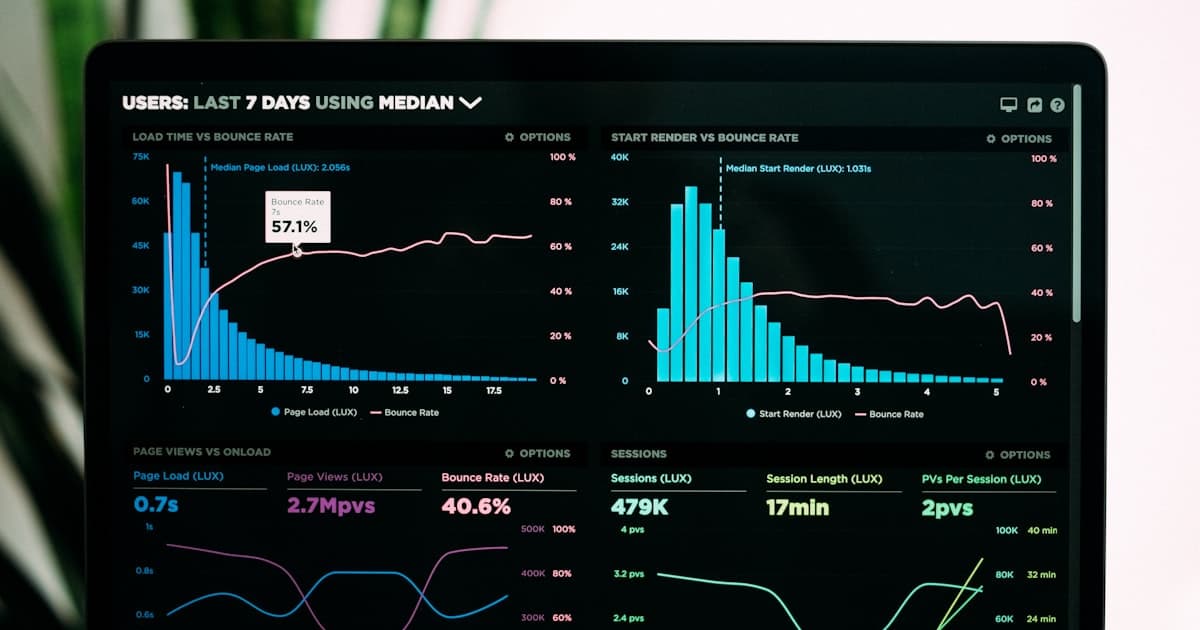
Image: Unsplash (Unsplash License). Analytics dashboards enable real-time AI search visibility monitoring.
Additional tryprofound.com Customer Success Stories
Beyond the deep dives above, Profound's customers page documents five additional case studies with notable results:
| Company | Industry | Key Result |
|---|---|---|
| CRS Credit API | Credit/Finance | 20x increase in AI visibility |
| One Identity | Cybersecurity | From invisible to #1 in competitive cybersecurity market |
| Statsig | Feature Management | Took control of AI presence in less than one week |
| Lake.com | Travel | 5x branded traffic by tapping into AI search behavior |
| Airbyte | Data Integration | Tripled AI brand visibility in one week |
Profound's customer base extends well beyond these case studies. Their customers page displays logos from major brands including MongoDB, Indeed, Mercury, DocuSign, Zapier, Ramp, Plaid, Brex, US Bank, Chime, Clay, Figma, Wayfair, LG, CarGurus, and many more. According to Sequoia Capital's partnership announcement, the platform serves Fortune 10 companies alongside high-growth startups.
How Profound's Platform Drives These Results
Understanding why these tryprofound.com customer success stories produce such consistent results requires understanding how Profound's platform differs from traditional AI SEO tools.
Traditional SEO tools track Google rankings, backlinks, and keyword positions. Profound tracks something fundamentally different: how AI systems reference, cite, and present your brand when users ask questions. As the company explains on their blog about direct monitoring versus API limitations, they actively monitor consumer-facing AI search engines rather than relying on static API model calls—because the responses users actually see can differ significantly from API outputs.
Key platform capabilities that drive customer results include:
- Answer Engine Insights: Real-time monitoring across ChatGPT, Perplexity, Google AI Overviews, Microsoft Copilot, Claude, and Gemini simultaneously
- Prompt Volumes: Reveals what people are actually asking AI answer engines, enabling brands to track trending questions, identify emerging topics before competitors, and measure sentiment in real-time AI conversations
- Citation Analysis: Identifies which content formats, structures, and messaging styles AI engines prefer to cite
- Competitive Benchmarking: Tracks competitor visibility in AI search results to identify gaps and opportunities, as demonstrated in both the Ramp and 1840 & Co case studies
- Content Optimization: Data-driven recommendations for creating content specifically structured for AI citation (FAQ formats, comparison pages, direct answers)
What sets Profound apart, according to third-party reviews from Nick Lafferty, are three proprietary datasets that no other platform can match: AI Prompts and Responses, Agent Analytics, and Real User Conversations (Prompt Volumes). These datasets, built on analyzing over 1 billion citations daily across 30 billion crawler visits, give Profound customers insights that simply aren't available elsewhere.
The Reddit Factor: Profound's Data on AI Citations
One of the most significant findings from Profound's research comes from their collaboration with Reddit, analyzing over 4 billion AI citations and 300 million answer engine responses. The findings have direct implications for any brand's AI search strategy.
Reddit is the #1 most-cited source across major answer engines, accounting for 3.11% of all AI citations—ahead of YouTube (2.13%), Wikipedia (1.35%), and Forbes (0.80%). The breakdown by platform reveals interesting patterns:
- Perplexity: Reddit ranks #1 most-cited source
- ChatGPT: Reddit ranks #2 (behind Wikipedia)
- Google AI Overviews: Reddit ranks #2
- Microsoft Copilot: Reddit ranks #31
Perhaps most critically, AI engines cite Reddit for both positive (5% of citations) and negative (6.1% of citations) brand sentiment. This means Reddit threads directly influence how AI systems describe your brand to potential customers. As Profound's research notes, AI does not index for upvotes or karma—it prioritizes clear, direct answers in natural language.
The strategic implication is significant: brands need to monitor and participate in Reddit conversations that AI engines may surface. As multiple r/SEO community discussions confirm, Reddit content has become a primary input for AI-generated brand recommendations. Niche subreddits like r/whatcarshouldIbuy and r/BuyItForLife receive preferential treatment over official brand sites for purchase-intent queries.
Different AI platforms also construct distinct “source stacks”: ChatGPT pairs Reddit with Wikipedia, review sites, and news sources; Google AI Overviews combines Reddit with YouTube and Quora; Microsoft Copilot blends Reddit with business sites like Forbes. Understanding these patterns is essential for optimizing content across all AI search channels.

Image: Unsplash (Unsplash License). Data-driven growth through AI search visibility optimization.
Why tryprofound.com Customer Success Stories Matter for SEO Strategy
These tryprofound.com customer success stories matter because they document a fundamental shift in how search works. The data is compelling: 700 million people use ChatGPT weekly (a 4x increase year-over-year), 60% of consumers now begin product research using AI assistants, and some Profound customers report 700% increases in AI referral traffic.
AI search is fundamentally different from traditional search optimization. As Sequoia Capital notes in their investment thesis: “AI assistants don't serve up a list of ranked links; they generate a single, authoritative, probabilistic response based on what they ‘know’ about your brand.” This means the traditional playbook of building backlinks and optimizing for keyword rankings is no longer sufficient.
Answer Engine Optimization (AEO), the discipline these case studies demonstrate, requires a fundamentally different approach. Instead of optimizing for crawler-based indexing, brands must optimize for AI-generated citations—structured content that AI systems can easily extract, attribute, and present to users.
The 1840 & Co case study illustrates this perfectly: a single, strategically structured blog post outperformed years of traditional SEO investment by competitors. Ramp's case study shows that even established brands with strong traditional search presence can have massive blind spots in AI search visibility. And Hone's 800% visibility boost demonstrates how AI-optimized content workflows can produce results that would take years to achieve through conventional SEO alone.
How to Get Started with AI Search Optimization
Based on the patterns across these tryprofound.com customer success stories, here is a practical framework for brands looking to improve their AI search visibility:
- Map your brand queries across AI platforms: Search for your brand and product categories across ChatGPT, Perplexity, Google AI Overviews, and Copilot. Note where you appear (and where you don't). The gap between your traditional search presence and AI search presence reveals your optimization opportunity.
- Analyze competitor citations: Identify which competitors are being cited by AI answer engines and study their content structure. As the Ramp and 1840 & Co case studies show, understanding what AI systems prefer to cite is the foundation of effective AEO.
- Create content structured for AI answer engines: Focus on comparison pages, FAQ formats, and direct-answer content. Use clear heading structures, bite-sized information blocks, and explicit brand positioning. The 1840 & Co case study proved that even a single well-structured blog post can generate measurable results.
- Monitor and iterate continuously: AI search results change as models are updated and new content is indexed. Use AI search monitoring platforms to track your visibility over time, identify what's working, and adjust your strategy based on real citation data rather than assumptions.
- Leverage Reddit and community content strategically: Given Profound's finding that Reddit is the #1 most-cited source across answer engines, monitor relevant subreddits for brand mentions, participate authentically in industry conversations, and create content that addresses genuine user questions from community discussions.
Frequently Asked Questions
Learn How AI Search Monitoring Improves SEO Strategy
Our in-depth guides cover the tools, strategies, and frameworks brands use to optimize for AI-powered search engines — from answer engine optimization to agile SEO workflows.
Read Our AI SEO Strategy GuideSources:
- Profound: Customer Success Stories
- Profound: 1840 & Co Answer Engine Optimization Case Study
- Profound: How Ramp Increased AI Brand Visibility 7x
- PR Newswire: Profound Raises $35M Series B
- Sequoia Capital: Partnering with Profound
- Profound: The Data on Reddit and AI Search
- Profound: Direct AI Search Monitoring vs. API Limitations
- Nick Lafferty: Profound Review — Best AEO/GEO Platform
- Oreate AI: Transformative Journeys — Customer Success Stories with TryProfound
- r/SEO: AI Search Optimization Discussions
Last updated February 2026. Images from Unsplash (Unsplash License).