
AI-Powered SEO Agents: The Complete Guide for 2026
Key Takeaway
AI-powered SEO agents are autonomous systems that combine large language models with knowledge graphs and API integrations to handle keyword research, technical audits, content optimization, and rank tracking without constant human supervision. Leading platforms like Nightwatch NightOwl, WordLift, and Relevance AI are enabling SEO teams to automate repetitive workflows and scale their strategies—though human oversight remains essential for strategic decision-making.
AI-powered SEO agents represent the most significant shift in search optimization since the introduction of machine learning to ranking algorithms. Unlike traditional SEO tools that require manual input for every analysis, these autonomous systems can research keywords, audit websites, generate optimized content, and track rankings across both conventional search engines and AI platforms—all with minimal human intervention. According to Relevance AI, these agents are “cutting-edge AI-powered tools designed to augment the capabilities of search engine optimization professionals,” combining machine learning, natural language processing, and predictive analytics to handle SEO tasks at a scale that was previously impossible.
For teams building agent workflows around Gemini image generation, our imagen family guide maps model IDs, pricing tiers, and rollout constraints that matter in production automations.

Image: Unsplash (CC0). AI-powered SEO agents are transforming how teams approach search optimization at scale.
What Are AI-Powered SEO Agents?
AI-powered SEO agents are a category of autonomous software that goes beyond the capabilities of traditional SEO platforms. Where tools like Ahrefs or Semrush require a human operator to initiate each analysis, interpret results, and decide on next steps, an AI-powered SEO agent can operate independently—perceiving its environment, making decisions, and executing actions through APIs and integrated tools.
As WordLift's research on autonomous AI agents in SEO explains, an AI autonomous agent combines three essential components: a “brain” (a language model paired with a knowledge graph), a perception layer that interacts with the environment, and a set of executable actions through APIs and tools. This architecture allows the agent to reason about SEO problems, gather data from multiple sources, and take action—whether that means generating content recommendations, implementing structured data, or adjusting a keyword targeting strategy.
The distinction matters because it represents a fundamental shift in how SEO work gets done. Relevance AI notes that SEO specialists previously relied on “a hodgepodge of tools, spreadsheets, and gut instincts,” spending hours on manual analysis. AI-powered SEO agents consolidate and automate this work, processing vast amounts of data instantly and adapting to algorithm changes in real time.
How AI-Powered SEO Agents Work
Understanding the architecture behind AI-powered SEO agents helps explain both their capabilities and their limitations. The most sophisticated agents use a neuro-symbolic approach that merges the pattern recognition of neural networks with the logical reasoning of knowledge graphs.
Knowledge Graphs as Persistent Memory
According to WordLift's technical analysis, the knowledge graph functions as the agent's persistent memory, storing content and keyword analysis in triples using reference ontologies. The language model “reads” from this graph before making predictions, giving it structured context that pure LLM-based systems lack. This is critical because, as WordLift points out, “a Large Language Model doesn't know what it knows”—pairing it with a knowledge graph grounds its outputs in verified, structured data.
Graph Retrieval-Augmented Generation (G-RAG)
WordLift's approach uses Graph Retrieval-Augmented Generation (G-RAG), which combines retrievers that search external sources with generators that produce contextually accurate responses. The WordLift Reader generates vector-based indices from articles, enabling the agent to pull relevant content fragments when generating recommendations or creating new content. This architecture produces more accurate, context-aware outputs than standard LLM prompting alone.
Workflow Orchestration
For teams building custom AI-powered SEO agents, workflow orchestration platforms provide the connective tissue. Search Engine Land's practical walkthrough of n8n demonstrates how these platforms function as “an AI-powered Zapier” that interprets data, transforms it, and determines subsequent actions rather than simply passing information between steps. A dual AI agent node structure often works well for smaller, focused SEO tasks—one node handles analysis while the other formats and delivers outputs.
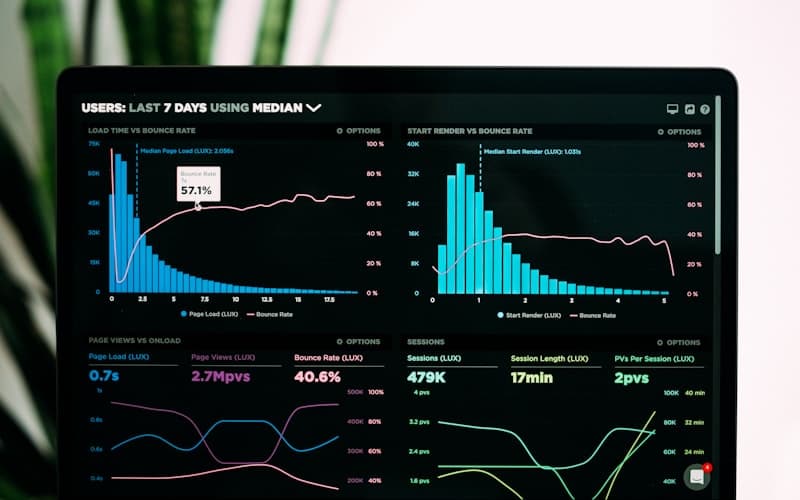
Image: Unsplash (CC0). Modern AI-powered SEO agents orchestrate complex workflows across multiple data sources and tools.
Key Capabilities of AI-Powered SEO Agents
The capabilities of AI-powered SEO agents span virtually every domain of search optimization. Drawing on documentation from Relevance AI, Nightwatch, and WordLift, here are the core functions these agents handle:
Automated Keyword Research and Clustering
AI-powered SEO agents can forecast trending keywords before they peak, cluster related terms into topical groups, and map user intent patterns across search queries. Relevance AI highlights predictive keyword forecasting as a core capability—identifying emerging search trends based on pattern analysis rather than waiting for tools to report historical volume data.
Technical SEO Auditing
Agents continuously scan websites for technical issues including broken links, duplicate content, crawl errors, missing structured data, and page speed problems. Nightwatch's NightOwl agent performs these audits automatically and can implement fixes without waiting for human approval, identifying issues that would take a human specialist hours to discover manually.
Content Optimization and Generation
From generating data-driven content briefs to optimizing existing pages with NLP-informed recommendations, AI-powered SEO agents handle content work at scale. WordLift's agent uses entity analysis to identify content gaps by extracting entities from webpages, comparing competitive URLs, and highlighting missing entities relevant to search intent. Its Content Expansion API can then augment webpage content by incorporating desired entities automatically.
Rank Tracking Across Search Engines and AI Platforms
Modern AI-powered SEO agents track rankings not just on Google, but across AI platforms like ChatGPT, Perplexity, and Gemini. Nightwatch claims to serve “10,000+ scaling teams” tracking performance across both traditional search engines and AI platforms—a capability that has become essential as AI search interfaces continue to grow their share of how users discover information. For deeper analysis of this trend, see our guide on AI search monitoring platforms.
Competitor Monitoring and Intelligence
AI agents provide continuous competitor intelligence, tracking changes to competitor websites, monitoring their content strategies, and identifying opportunities where competitors are gaining visibility. Relevance AI includes competitor intelligence as a core agent capability, providing “strategic insights” that help teams adjust their approach based on real-time competitive data rather than periodic manual analysis.
Structured Data Automation
One of the most technically impactful capabilities is automated structured data implementation. WordLift's AI agent automatically generates Schema.org markup across 32+ languages, supporting HowTo, FAQ, VideoObject, Voice, and other schema types. According to AllAboutAI's review, 84% of enterprise users report measurable traffic improvements within 3–6 months of implementing WordLift's structured data automation.
100+
Hours saved per month
84%
See traffic gains in 3-6 months
33%
Search from AI agents
32+
Languages supported
Top AI-Powered SEO Agent Platforms
The landscape of AI-powered SEO agent platforms ranges from fully managed solutions to customizable workflow builders. Here are the leading platforms based on our research:
Nightwatch NightOwl
Nightwatch's NightOwl positions itself as a “24/7 AI SEO Specialist that never sleeps.” The agent automates keyword research, technical audits, content optimization suggestions, and real-time rank tracking across search engines and AI platforms. Nightwatch claims the system saves “100+ hours” through task automation and works continuously without human intervention. The platform offers a 14-day free trial with no credit card required, enterprise-grade security, and activation through the Nightwatch dashboard. It displays live operational status, recent findings, and projected impact metrics.
WordLift AI Agent
WordLift takes a knowledge graph-first approach to AI-powered SEO. Its agent automatically builds a semantic network of interconnected entities for your website, implements structured data across multiple schema types, and provides entity-based content optimization. The platform supports 32+ languages and offers AI-powered content recommendations through a chat-based interface. Pricing starts at €160/month for the Agent Plan, with Business+ at €799/month including expert strategy support. WordLift rates 4.7/5 on G2 and 4.8/5 on Capterra, though its WordPress focus and pricing can be limiting factors for smaller teams (source: AllAboutAI).
Relevance AI
Relevance AI offers a no-code platform for building custom AI agents, including an SEO Specialist template that “assigns project tasks, tracks progress, updates stakeholders on milestones, identifies resource gaps, and suggests deadline adjustments.” The platform's strength lies in its flexibility—teams can customize agent behavior, connect to their existing tools, and build workflows tailored to their specific SEO processes without writing code.
n8n and Custom Workflow Platforms
For teams with technical resources, platforms like n8n enable building custom AI-powered SEO agents from scratch. n8n offers both cloud-hosted and self-hosted deployment, a canvas interface for designing workflows, and AI agent nodes that communicate with LLMs from OpenAI, Google, and Anthropic. SEO applications include generating content and full articles, creating meta descriptions and Open Graph data, reviewing pages from CRO/UX perspectives, and building schema validation tools. The trade-off is a higher technical barrier but unlimited customization.
Additional Platforms
The broader AI SEO agent ecosystem includes Writesonic (AI agent with built-in SEO tools at $249/month), AirOps (workflow platform with prebuilt SEO templates), SE Ranking (full-scale AI-driven SEO automation with predictive analytics), and Search Atlas (enterprise platform with an OTTO SEO agent). For detailed comparisons of these and other tools, see our complete AI SEO tools guide.
| Platform | Agent Approach | Key Strength | Price | Best For |
|---|---|---|---|---|
| Nightwatch NightOwl | Fully autonomous 24/7 agent | Automated implementation | 14-day free trial | Teams wanting hands-off SEO automation |
| WordLift | Knowledge graph + AI agent | Structured data & entity SEO | €160/mo | Semantic SEO and schema automation |
| Relevance AI | No-code agent builder | Customizable templates | Free tier available | Teams building custom SEO workflows |
| n8n | Workflow orchestration with AI nodes | Unlimited customization | Free (self-hosted) | Technical teams with developer resources |
| SE Ranking | Built-in AI with full SEO suite | All-in-one with predictive analytics | $65/mo | SMBs needing integrated AI SEO tools |
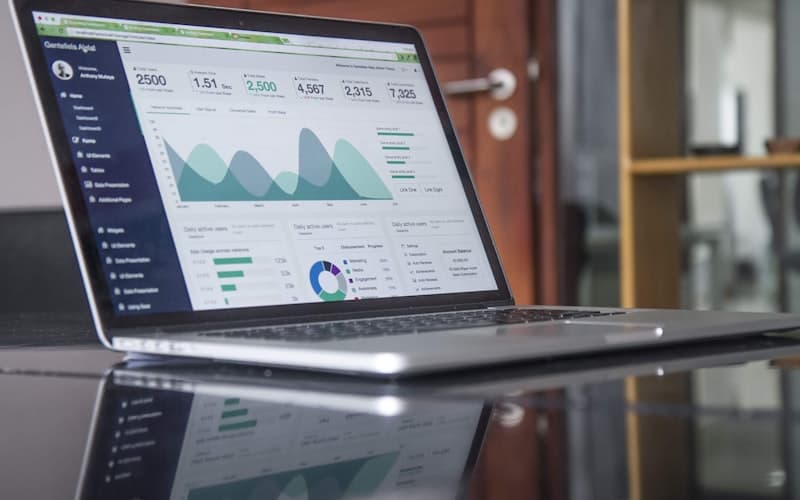
Image: Unsplash (CC0). AI-powered SEO agent dashboards provide real-time performance data and automated recommendations.
What the Reddit SEO Community Says About AI Agents
The SEO practitioner community on Reddit has been actively discussing AI-powered SEO agents, and their perspectives provide valuable ground-truth insights beyond marketing claims. A notable r/SEO thread on building SEO AI agents generated discussion around the practical realities of implementing these tools in production SEO workflows.
Key themes from the Reddit discussion include:
- Build vs. buy debate: Community members are split between building custom agents using tools like n8n and LangChain versus purchasing ready-made solutions. The consensus leans toward starting with existing platforms and only building custom solutions when specific workflow needs justify the engineering investment.
- Authenticity concerns: A recurring theme across Reddit SEO discussions is the importance of maintaining authentic, value-driven approaches. As one r/SEO community member noted, automation-first tactics “can look inauthentic and create brand-safety risk”—the safer approach is to “lead with value, then link only when it directly answers the question.”
- Practical limitations: Practitioners consistently report that AI agents work best for data-heavy, repetitive tasks—keyword clustering, technical audits, content brief generation—but struggle with nuanced strategic decisions, creative content, and understanding brand voice.
- Integration challenges: Multiple Reddit threads highlight that the biggest obstacle is not the AI capability itself but integrating agents into existing workflows and getting team buy-in. This aligns with Relevance AI's acknowledgment of “internal resistance” and “existing workflow integration” as key challenges.
The broader Reddit SEO community sentiment can be summarized as cautiously optimistic: AI-powered SEO agents are genuinely useful for specific tasks, but the technology is still maturing, and human expertise remains irreplaceable for strategic decision-making. As one practitioner put it, “AI search rewards the same thing Reddit always has: real experience, clearly explained, in the right community at the right time.”
Real-World SEO Agent Workflows
Understanding theoretical capabilities is helpful, but the real value of AI-powered SEO agents comes from practical implementation. Based on Search Engine Land's workflow walkthrough and platform documentation, here are workflows that teams are actively deploying:
Workflow 1: Automated Search News Monitoring
An n8n workflow scrapes RSS feeds from search news publishers, processes articles through an AI agent node that generates summaries, converts the output to formatted HTML through a second agent node, and delivers the final digest via email or Microsoft Teams. This gives SEO teams a daily briefing on algorithm updates, industry changes, and competitor news without manual monitoring.
Workflow 2: Bulk Meta Description Generation
AI agents can process a spreadsheet of URLs, crawl each page, extract key content signals, and generate optimized meta descriptions that incorporate target keywords while maintaining unique, compelling copy for each page. This workflow is particularly valuable for e-commerce sites with thousands of product pages. Relevance AI highlights this as a key use case for e-commerce—crafting “unique, optimized product descriptions for thousands of items, adapting based on inventory and sales data.”
Workflow 3: Technical Audit and Fix Pipeline
Nightwatch's NightOwl agent demonstrates a fully autonomous version of this workflow: the agent continuously monitors your website for technical issues, detects ranking surges or drops, uncovers quick-win keywords, and identifies optimization opportunities in real time. The platform reports detecting issues and “implementing optimizations automatically” based on its findings.
Workflow 4: Content Gap Analysis and Brief Generation
WordLift's entity analysis workflow demonstrates how AI-powered SEO agents approach content strategy: the agent analyzes search rankings, extracts entities from your pages and competitor URLs, identifies missing entities relevant to search intent, and generates content briefs that address specific gaps. The Content Expansion API can then augment existing pages by incorporating the identified entities automatically.
Workflow 5: Schema Validation and Implementation
SEO agents can crawl your website, identify pages missing structured data, determine the appropriate schema type for each page (Article, FAQ, HowTo, Product), generate the JSON-LD markup, and either implement it directly or submit it for review. Search Engine Land notes that n8n can be used for “building SEO scanners and schema validation tools” through custom workflow configurations.
Benefits and Limitations of AI-Powered SEO Agents
Benefits
- Scale: AI agents handle work that would require entire teams to do manually. Nightwatch claims its agent saves 100+ hours monthly through task automation.
- Speed: Relevance AI notes that agents process “vast data amounts instantly,” detecting algorithm changes and adjusting strategies in real time rather than days or weeks later.
- 24/7 operation: Unlike human specialists, AI agents work continuously. Nightwatch positions this as a core value proposition—your SEO never sleeps.
- Consistency: Agents apply the same analytical rigor to every page and every keyword, eliminating the inconsistency that comes with manual work across large sites.
- Multi-source intelligence: The best agents combine data from search engines, AI platforms, competitor sites, and your own analytics into unified insights.
Limitations
- Tool immaturity: Search Engine Land cautions that these platforms are “still immature” and core updates can break existing workflows.
- LLM memory limits: Connected language models encounter context window limits and can “over-apply generic guidance” rather than adapting to specific situations.
- Cannot replace strategic thinking: AI agents lack depth for “highly subjective, complex tasks” and should not replace substantial portions of team roles.
- Algorithm adaptation challenges: Relevance AI acknowledges the difficulty of keeping pace with thousands of annual Google algorithm updates and the complexity of natural language processing.
- Cost barriers: WordLift starts at €160/month, Writesonic at $249/month for professional plans. Enterprise platforms cost significantly more, requiring clear ROI justification (source: AllAboutAI).
- WordPress dependency: Some platforms like WordLift are primarily WordPress-focused, limiting options for sites on other platforms.
The bottom line, echoed across both industry analysis and the Reddit SEO community: AI-powered SEO agents are powerful tools for augmenting human expertise, not replacing it. As Search Engine Land emphasizes, the biggest gains come from “small, practical workflows” rather than sweeping automation attempts.
How to Get Started with AI-Powered SEO Agents
Implementing AI-powered SEO agents effectively requires a phased approach. Based on practitioner insights from the Reddit SEO community and platform documentation, here is a practical framework:
Phase 1: Assess Needs and Choose a Platform (Week 1–2)
- Identify which SEO tasks consume the most time on your team—these are your highest-value automation candidates
- Evaluate platforms based on your technical capacity: fully managed (Nightwatch), semi-managed (WordLift, Relevance AI), or custom (n8n)
- Start with free trials where available—Nightwatch offers 14 days, Relevance AI has a free tier
- Assess integration requirements with your existing tool stack (Google Analytics, Search Console, CMS)
Phase 2: Start Small with Focused Workflows (Week 3–6)
- Deploy one or two specific workflows rather than trying to automate everything at once
- Good starting points: technical auditing, keyword monitoring, or meta description generation
- Maintain human review of all agent outputs during this phase to calibrate quality
- Use AI content optimization tools alongside agents for content-focused workflows
Phase 3: Scale and Iterate (Week 7–12+)
- Measure the impact of initial workflows on key metrics (time saved, ranking changes, content output)
- Expand to additional workflows based on what produced the best results
- Consider building custom workflows on n8n or similar platforms for unique needs
- Integrate AI agent insights into regular reporting alongside traditional SEO KPIs
- Scale with agile SEO workflows for continuous optimization
The Future of AI-Powered SEO Agents
The trajectory of AI-powered SEO agents points toward increasingly autonomous, capable systems that handle more of the SEO workflow independently. Several trends will shape this evolution:
- AI agents as search traffic source: According to Search Engine Journal, AI agents now account for roughly 33% of organic search activity, including GPTBot, ClaudeBot, PerplexityBot, and Google-Extended. This means AI-powered SEO agents must optimize not just for human searchers but for other AI systems that browse on behalf of users.
- Neuro-symbolic AI advances: WordLift's research emphasizes that merging logic-based reasoning with knowledge representation “significantly enhances accuracy” of AI agents. As knowledge graph technology matures, expect agents to make more reliable, context-aware decisions.
- Multimodal optimization: As AI models increasingly process images, video, and audio alongside text, SEO agents will evolve to optimize content across all media types, not just written text.
- Democratized agent building: Platforms like Relevance AI and n8n are making it possible for non-technical teams to build custom SEO agents. WordLift's blog also mentions no-code options like CognosysAI, Reworkd.ai's AgentGPT, and Toliman AI for building autonomous agents without programming expertise.
- Deeper integration with existing SEO tools: As we covered in our analysis of how AI and SEO are evolving, the boundary between traditional SEO platforms and AI agents is blurring, with tools like SE Ranking and Semrush embedding agent capabilities directly into their existing products.
Sources
- Relevance AI. (2025). “SEO Specialist AI Agents”. RelevanceAI.com.
- Reddit r/SEO. (2025). “Currently working on SEO AI agents, any thoughts?”. Reddit r/SEO.
- WordLift. (2025). “AI Agent for SEO”. WordLift.io.
- WordLift Blog. (2025). “Autonomous AI Agents in SEO”. WordLift.io.
- Nightwatch. (2025). “SEO AI Agent”. Nightwatch.io.
- Search Engine Land. (2025). “AI Agents in SEO: A Practical Workflow Walkthrough”. SearchEngineLand.com.
- AllAboutAI. (2025). “WordLift Review 2025”. AllAboutAI.com.
- Search Engine Journal. (2026). “5 Key Enterprise SEO and AI Trends for 2026”. SearchEngineJournal.com.
- Reddit r/SEO and r/bigseo communities. Various discussion threads on AI-powered SEO agents and automation strategies.
Frequently Asked Questions
Related Articles
Best AI SEO Tools in 2026
Complete guide comparing 13+ AI SEO tools across 5 categories
AI Search Monitoring & SEO Strategy
How AI search monitoring platforms improve your SEO strategy
How AI and SEO Are Evolving in 2026
Key trends including AEO, entity optimization, and AI Overviews
AI SEO Tools Scale Agile Solutions
How AI-powered platforms transform agile SEO workflows
Compare AI-Powered SEO Tools & Agents
Our comprehensive guide compares 13+ AI SEO tools across pricing, features, and use cases — including platforms with AI agent capabilities for automated optimization.
View AI SEO Tools Comparison