
google ai overviews ranking factors for citation-ready SEO
Google AI Overviews ranking factors start with standard Google Search eligibility: indexable pages, usable snippets, and people-first content that resolves a complex question quickly. The biggest lift comes from combining direct answers, visible evidence, and stable technical controls so Google can fan out across related subtopics and still trust your page as a supporting link.
google ai overviews ranking factors explained with a practical framework for eligibility, evidence, and measurement. Build pages Google can trust.

google ai overviews ranking factors start with the same inputs that already determine whether a page can participate in Google Search: crawlability, indexing, snippet eligibility, and content quality. What changes in Google AI Overviews SEO is the retrieval context. Instead of showing one blue link for one query, Google can expand the task into related sub-questions, synthesize the answer, and surface supporting links from multiple pages that help users explore the topic further.
That shift means the pages most likely to appear are rarely the ones with the most aggressive keyword targeting. They are the ones that reduce ambiguity. If you want to improve how to rank in Google AI Overviews, you need pages that satisfy the technical requirements for Search, answer the user's main question immediately, and present supporting details in a format that remains easy to parse when Google fans out across related searches. The rest of this guide translates Google's official AI features guidance into an operating model you can actually ship.
What are google ai overviews ranking factors in practical terms?
In practical operations, google ai overviews ranking factors are the combined signals that decide whether your page can be found, trusted, and displayed as a supporting source. Google's own documentation avoids publishing a secret ranking checklist and instead says the same SEO best practices still apply. That is the correct starting point, but it is not specific enough for a content team trying to prioritize work.
A useful way to translate the guidance is to separate inputs into four layers: eligibility, extractability, evidence, and topical fit. Eligibility covers the technical baseline: the page must return a valid response, remain indexable, and be allowed to show a snippet. Extractability covers whether the answer is easy to parse from headings, lists, tables, and concise explanation blocks. Evidence covers whether important claims are supported by visible, trustworthy detail. Topical fit covers whether the page is a sensible source for the actual task implied by the query fan-out.
| Signal Layer | What It Influences | Common Failure Pattern |
|---|---|---|
| Eligibility | Crawlability, indexing, snippet usage | Blocked bots, noindex, preview controls that are too strict |
| Extractability | Answer clarity for synthesis and supporting links | Long introductions, vague sections, poor heading logic |
| Evidence | Confidence in claims and recommendations | Unsupported statements and outdated examples |
| Topical fit | Relevance to the user's full decision journey | Pages that rank for one term but do not solve the real task |
This framing also prevents a common mistake: optimizing AI Overviews as if it were purely a schema or prompt phenomenon. Pages win because Google can both retrieve them and use them with confidence. That is why strong performance usually comes from combining the editorial rules in our writing for AI answers framework with the crawl and indexing controls in the technical SEO checklist.
What does Google officially say about google ai overviews seo?
Google's clearest guidance is in the Search Central document AI features and your website. The core message is blunt: there are no extra technical requirements and no special schema needed for AI Overviews. If your page is already eligible for Google Search and can appear with a snippet, it can be eligible to show as a supporting link in AI Overviews.
That official position matters because it narrows the field of real work. You do not need to invent a separate markup system or publish a hidden AI-only file to compete for AI Overviews visibility. Instead, Google points site owners back to the same foundations it has emphasized for years: allow crawling, make important information available in text, keep structured data aligned with visible content, support the page with strong images, and publish helpful, reliable, people-first information. The companion Search Central blog post Top ways to ensure your content performs well in Google's AI experiences on Search reinforces the same priorities.
Why this guidance changes prioritization
Teams often over-invest in speculative tactics because AI Overviews feel new. Google's guidance suggests the opposite. The best path is to improve the pages you already want to rank and then remove the forms of ambiguity that make them hard to use in an AI response. That means better answer structure, better evidence, and fewer technical conflicts, not more experimental markup.
Why snippet eligibility matters so much
Google explicitly ties supporting-link eligibility to a page being allowed to appear with a snippet in Search. That makes preview controls an overlooked part of AI Overviews optimization. If you aggressively restrict snippet use, you may also restrict how much of the page can participate in AI features. This makes the guidance in our meta robots guide and X-Robots-Tag workflow directly relevant to AI Overviews SEO.
AI Overviews is not a separate search engine. It is a different expression of Google Search, which is why classic SEO requirements still decide who gets considered.
How do you rank in Google AI Overviews with stronger content patterns?
The content patterns that help AI Overviews are the ones that make a complex answer easier to assemble without stripping away nuance. The ideal page does not merely define a term. It helps a user make a decision, compare options, or understand tradeoffs. This aligns with Google's repeated emphasis on unique value, especially for longer and more specific questions.
Answer the main task in the first paragraph
Start with the exact problem the query is trying to solve. For a page like this one, the job is not to describe AI Overviews in vague terms. The job is to explain which factors influence visibility and what a team should do next. Leading with the answer makes the page more useful for humans and more extractable for AI systems.
Use headings that match real follow-up questions
Google's AI systems can fan out across subtopics, so your page should anticipate those branches. Question-led H2s such as "Do you need special schema for AI Overviews?" or "How do you measure AI Overviews traffic?" create natural retrieval anchors. This is the same logic behind our intent mapping guide: build around decisions, not just terms.
Turn dense guidance into comparisons and thresholds
Tables, checklists, and explicit thresholds help AI Overviews because they compress a complex topic into scannable logic. For example, a team deciding whether a page is ready for AI Overviews visibility can use criteria such as snippet eligibility, source coverage, and internal linking depth instead of arguing from gut feel.
| Content Pattern | Execution Rule | Likely Benefit |
|---|---|---|
| Answer-first intro | Resolve the main question in 2 to 4 sentences | Faster extraction and better user fit |
| Question-led H2s | Reflect follow-up questions from the decision journey | Stronger coverage across query fan-out |
| Comparison tables | State conditions, tradeoffs, and selection logic | Better decision support |
| Evidence-adjacent claims | Keep sources close to the statements they support | Higher confidence and lower fact risk |
Pages built this way tend to help classic rankings too, which is why AI Overviews optimization works best when it is embedded into your normal editorial QA rather than run as a side project.

Which technical factors most affect google ai overviews visibility?
Technical SEO still acts as the gatekeeper. Google says AI features use the same technical requirements as Search overall, which means every preventable technical issue can remove a page from consideration before content quality even matters. The biggest advantage here is that you do not need a new audit template. You need to verify that your highest-value pages remain easy to crawl, render, index, and preview.
Keep crawling, status codes, and canonicals clean
AI Overviews cannot support a page that Google cannot reliably access. Confirm that important pages return HTTP 200, are not accidentally blocked in robots.txt or by edge infrastructure, and point to the intended canonical URL. If you are resolving variant URLs or scaling content clusters, the safeguards in our canonical tags guide matter as much here as they do in classic SEO.
Respect preview controls and snippet rules
This is one of the least-discussed AI Overviews factors. Google specifically points site owners to `nosnippet`, `data-nosnippet`, `max-snippet`, and `noindex` when controlling how pages appear in AI features. The implication is simple: if you make preview controls more restrictive, you limit what Google can confidently show from your page in AI results.
Match structured data to visible text
Google also calls out structured data accuracy. There is no special AI Overviews schema, but there is still a downside to markup that drifts away from what users actually see. Treat schema as a consistency layer, validate it regularly, and keep it aligned with the visible answer on the page. That is the same discipline laid out in the structured data playbook and schema testing workflow.
Make supporting facts available in text
Important content cannot live only inside screenshots, expandable widgets, or inaccessible UI components. Google explicitly calls out the need for important content to be available in textual form. For AI Overviews, that means the core method, thresholds, limitations, and definitions should exist in the HTML, not only in visuals or scripts.
Do authority, source diversity, and user behavior still matter?
Yes, but the effect is different from a simple ten-blue-links ranking model. Google says AI Overviews can display a wider and more diverse set of helpful links than classic search because the system may issue multiple related searches across subtopics. That expands the opportunity set. A site does not always need to be the single strongest traditional result for the head term to become a useful supporting source for one branch of the answer.
At the same time, source trust and consensus still matter because Google has to decide whether the page deserves inclusion. Pages that provide original perspective, close evidence gaps, and align with what the broader web says about the topic are easier to use than pages making broad claims without support. This is why entity clarity and internal topical reinforcement still belong in the playbook. The site architecture guidance in our internal linking model and the consistency checks in the brand trust signals guide both help reduce ambiguity.
Pew data explains the business stakes
A July 22, 2025 Pew Research Center analysis found that Google users clicked a traditional result in 8% of visits when an AI summary appeared versus 15% when it did not. It also found clicks on sources cited in the summary itself were rare at 1% of visits. That does not mean AI Overviews is worthless. It means you need better expectations: fewer but often more qualified clicks, and more importance placed on earning the citation in the first place.
Why authority is now more sectional than ever
Because AI Overviews can mix sources, authority becomes more sectional and situational. A site may not deserve the full answer, but it may deserve the evidence for one comparison, one benchmark, or one troubleshooting step. Content teams should therefore design pages so each major section can stand alone without losing context.
How should teams measure search console ai overviews traffic?
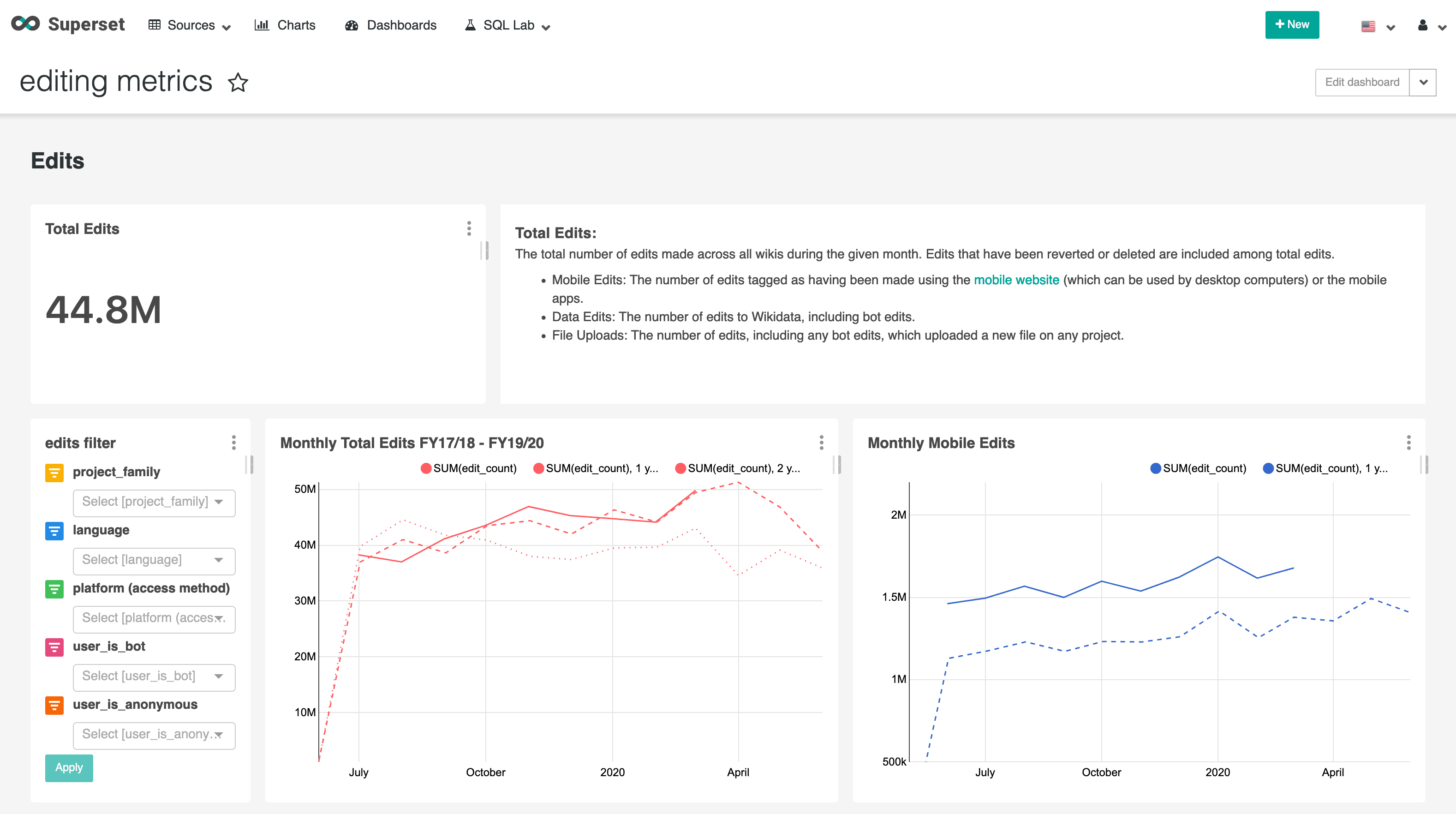
Google's AI features documentation says sites appearing in AI features are counted in Search Console's overall Web search traffic. That means there is no clean, universal AI Overviews dashboard you can depend on for every property. Measurement has to combine Search Console, analytics, and a controlled observation method if you want insight that is operationally useful.
Layer 1: Search visibility signals
Start with Search Console page and query trends, especially for pages updated specifically to improve AI Overviews visibility. Compare treated pages against similar control pages over 28-day windows so you do not mistake normal volatility for progress. If you also publish related pieces such as our Google AI Mode SEO guide, group those pages by topic cluster rather than reading them one by one.
Layer 2: Citation observation
Build a prompt set for commercially meaningful questions, log whether your site appears as a supporting source, and review the prompt set on a fixed cadence. You do not need hundreds of prompts to start. A disciplined set of 30 to 50 high-value prompts is more useful than casual spot checks done at random.
Layer 3: Visit quality and conversion signals
Google says clicks from pages with AI Overviews can be higher quality, so pair Search Console with engaged sessions, return visits, lead quality, and assisted conversions. This keeps your reporting aligned with business outcomes instead of overreacting to small click swings. The reporting logic mirrors our dashboard KPI model and SEO measurement playbook.
| Measurement Layer | Example KPI | Review Cadence |
|---|---|---|
| Visibility | Search Console clicks, impressions, CTR | Weekly |
| Citation | Supporting-link share on target prompts | Weekly |
| Engagement | Engaged sessions, return rate, time on page | Weekly |
| Business | Qualified leads, assisted conversions, revenue influence | Monthly |
What does a 90-day google ai overviews optimization plan look like?
The strongest rollout is narrow, instrumented, and cumulative. Choose a small group of pages already linked to meaningful demand, upgrade them in a repeatable way, and only scale once you know which changes actually improved visibility and visit quality.
Days 1 to 20: page selection and baseline
Pick 10 to 15 pages with strong intent, measurable conversion value, and clear room for structural improvement. Document current metadata, heading hierarchy, internal link context, snippet controls, and conversion baselines before editing. If a page has unresolved indexing or rendering issues, fix those before touching the copy.
Days 21 to 50: answer and evidence upgrades
Rewrite openings to answer the main decision quickly, restructure H2s around real follow-up questions, add comparison tables where useful, and move evidence closer to the claims it supports. This phase usually creates the biggest gain because it improves both extractability and factual confidence.
Days 51 to 70: technical and preview-control review
Validate robots rules, canonicals, HTTP status codes, schema consistency, and snippet controls. Make sure the important sections are available in textual HTML and not hidden by rendering issues. Verify image alt text and captions so the page remains useful in multimodal contexts as well.
Days 71 to 90: measure, compare, and expand
Review Search Console deltas, citation observations, and visit quality. Expand only after the first cohort shows improvement in at least two layers, ideally visibility and business quality. That discipline keeps AI Overviews optimization from becoming another publishing treadmill with no learning loop.
| Phase | Primary Deliverable | Exit Criteria |
|---|---|---|
| Baseline | Priority page set and measurement plan | Stable controls and success metrics |
| Implementation | Answer-first content and evidence refresh | Pages pass editorial and technical QA |
| Iteration | Prompt tracking, KPI review, next cohort | Improvements hold across two review cycles |
This rollout works because it treats google ai overviews ranking factors as a site system, not as a single-page trick. The teams that improve fastest are usually the teams that unify editorial structure, technical SEO, and performance reporting into one operating cadence.
FAQ: google ai overviews ranking factors
Sources
- Google Search Central: AI features and your website
- Google Search Central Blog: Top ways to ensure your content performs well in Google's AI experiences on Search
- Google Search Central: Creating helpful, reliable, people-first content
- Pew Research Center: Google users are less likely to click on links when an AI summary appears in the results
Updated April 2, 2026.